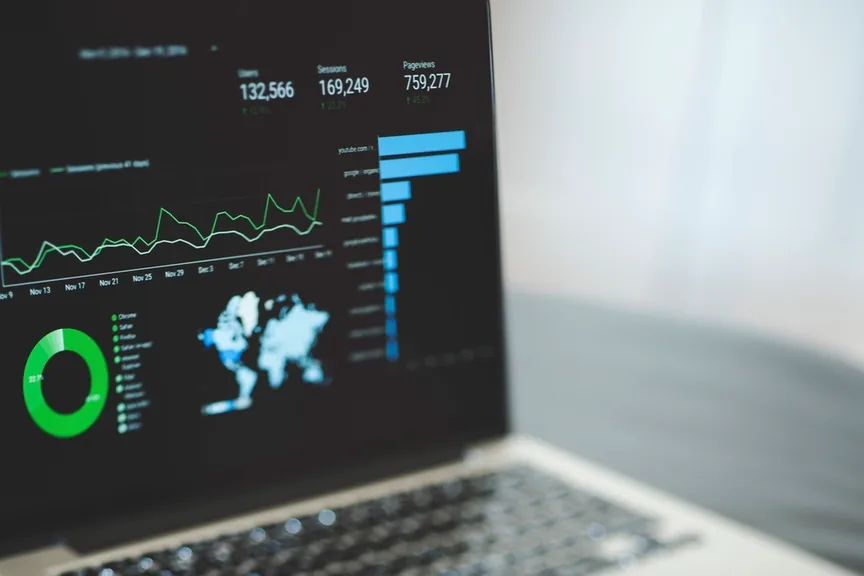
Market making & liquidity
Continuous buy and sell quotes that improve liquidity, tighten bid-ask spreads and help investors execute when they need to.
Quantitative finance combines mathematics, statistics, programming, financial theory and data analysis to solve financial problems. High-frequency trading is where those models meet microseconds — and where a better prediction is not enough unless you can act on it first.
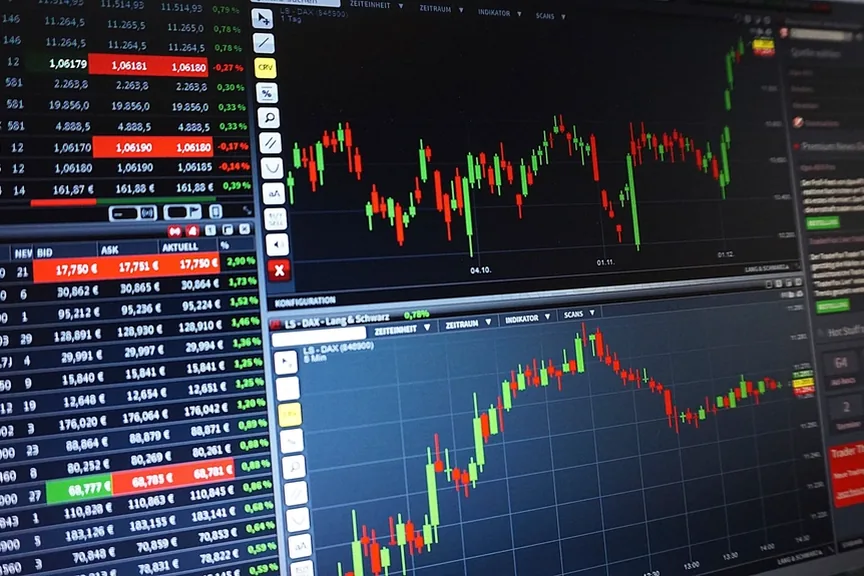
The named things you can buy, scoped so you know what arrives.
Continuous buy and sell quotes that improve liquidity, tighten bid-ask spreads and help investors execute when they need to.
Large orders broken into optimised child orders to reduce market impact and transaction cost, measured against a benchmark you agree up front.
Mathematical allocation of capital across assets, with constraints that reflect your mandate rather than a textbook.
Market, credit, liquidity and portfolio risk measured, stress-tested and wired into controls that can actually stop a position.
Valuation of options and complex instruments using quantitative models, validated against market data and independently reviewed.
Statistical and machine-learning models that identify potential opportunities, backtested honestly and monitored for decay in production.
Detection of pricing inconsistencies between related securities, exchanges and markets, including cross-market and ETF strategies.
Large volumes of market and order-book data processed to surface patterns, anomalies and usable signal at production scale.
Low-latency trading systems, market-data platforms, execution engines and risk systems, engineered for the exchange you connect to.
Mathematical models and production code that identify trading opportunities and execute orders — built on price movements, market relationships, order-book information and volatility.
Models that value options, futures, swaps and structured products, alongside risk calculations that estimate what a portfolio can lose under stress.
ML to find patterns, forecast market variables and classify regimes — supported by probability, statistics, optimisation and numerical methods rather than substituting for them.
Continuous two-sided quoting that supplies liquidity to the market while earning the spread, with inventory and adverse-selection risk controlled in real time.
Algorithms that detect temporary dislocations between related securities — cross-market, futures-versus-spot, ETF and microstructure signals — and trade the convergence.
Optimised C++, specialised hardware, high-performance networking and colocated servers near exchange infrastructure, because reacting faster decides whether the edge survives.
A median tick-to-trade that looked competitive was hiding a 99th percentile that decided the profitability of the book.
Fewer strategies reached production, and the ones that did behaved in live trading roughly as the research had said they would.
Bring us a strategy, a latency problem or a risk question. We will tell you what is modelling work, what is engineering work, and what is neither.